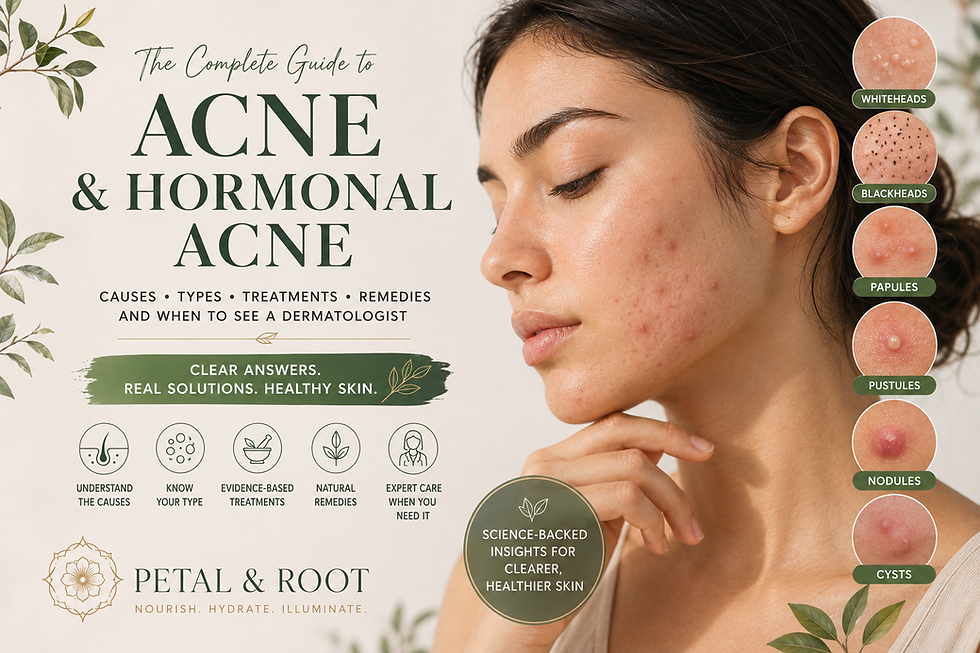
Healing Acne at the Root: Common Causes, Care, and Proven Natural Treatments
Updated: Oct 8
Rooted Wisdom Botanical Brief™
By Heather Nature, Founder & Formulator, Petal & Root®
Acne is often treated like a hygiene problem. Wash more. Strip oil. Kill bacteria. Dry everything out and hope for the best. That approach is outdated, and skincare specialists know it. In professional settings, acne is understood as a multifactorial condition, not a surface-level issue. It involves the skin barrier, follicular function, inflammation, hormones, and often the gut. When acne is approached correctly, the goal is not aggression. It is regulation and balance.
What Are We Really Treating?
At the center of most acne is the hair follicle. Inside that follicle, several things can go wrong:
Dead skin cells fail to shed properly.
Sebum thickens and becomes trapped.
The follicle opening narrows.
Inflammation builds.

This leads to comedones, open or closed, which are often described as hardened plugs or globules of oxidized sebum and keratin. These are not dirt. They are structural blockages.
Skincare professionals focus on correcting the environment that allowed those blockages to form.
Why Over-Drying Acne Makes It Worse
One of the first things skincare specialists learn is that stripping the skin creates rebound dysfunction.
When the barrier is compromised:
Sebum production increases in compensation.
Inflammation rises.
Cell turnover becomes erratic.
Follicular congestion worsens.
This is why many acne clients are both oily and dehydrated at the same time. Dry skin does not equal healthy skin. Balanced skin does.
The Proven Acne Treatment Philosophy
Treatment is focused on five core principles:
Normalize keratinization so dead skin cells shed properly.
Support barrier repair instead of eroding it.
Control inflammation without overstimulation.
Maintain an acidic skin pH.
Protect the microbiome, not sterilize it.
This approach reduces congestion gradually and sustainably, rather than triggering cycles of flare and suppression.
How Natural Skincare Fits Into Acne Treatment When Done Correctly
Natural products can support acne-prone skin by:

Reducing inflammatory signaling.
Supporting barrier lipids.
Improving hydration without occlusion overload
Assisting gentle exfoliation without trauma.
The key is support, not stimulation.
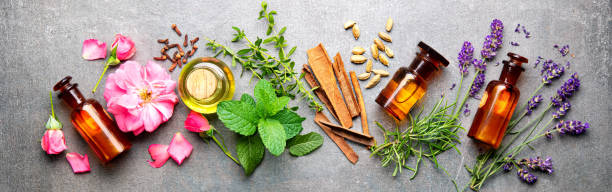
Respected Natural and Herbal Ingredients for Acne-Prone Skin
These ingredients are valued not because they are trendy, but because they align with skin physiology.
Willow Bark: Provides salicylate compounds that support gentle exfoliation and pore clarity without the harshness of high-strength acids.
Green Tea: Rich in polyphenols that reduce inflammation and help regulate excess sebum activity.
Licorice Root: Supports inflammation reduction and helps calm redness associated with acne lesions.
Calendula: Soothes compromised skin and supports barrier recovery during acne treatment.
Colloidal Oats: Reduce irritation, itching, and inflammatory signaling while supporting barrier integrity.
Jojoba Oil: Structurally similar to human sebum, helping regulate oil production without clogging pores when used appropriately.
These ingredients do not attack acne. They correct the conditions that allow acne to persist.
The Role of Gentle Exfoliation, Not Constant Peeling
Skincare professionals do not exfoliate acne aggressively at every visit. Over-exfoliation disrupts corneocyte cohesion and worsens inflammation.
Instead, exfoliation is:
Controlled.
Periodic.
Chosen based on skin response, not routine.
Natural exfoliants such as mild fruit acids, enzymes, or salicylate-containing botanicals can be effective when used sparingly and at appropriate pH levels.
Why Gut Health Matters in Acne, Even for Adults
There is strong evidence linking acne with:

Gut dysbiosis.
Chronic low-grade inflammation.
Insulin resistance.
Hormonal imbalance.
When the gut barrier is compromised, inflammatory mediators increase systemically, which can exacerbate acne severity. This does not mean acne is “caused” by the gut. It means the gut can influence inflammatory load.
Supporting Acne from the Inside, Without Extremes
A skin supportive internal environment includes:
Adequate protein intake to support tissue repair.
Fiber rich foods to promote microbial balance.
Reduced ultra processed foods that increase inflammatory signaling.
Managing blood sugar stability.
Supporting digestion and nutrient absorption.
Extreme elimination diets are rarely sustainable or necessary. Consistency matters more than restriction.
What You Should Know
Acne improves when the skin feels safe and balanced. That safety comes from:
Stable pH
Adequate hydration
Lipid balance
Reduced inflammation
Predictable routines
Natural skincare and herbal ingredients can absolutely support acne-prone skin when they are used with respect for biology.
Remember: Internal Support Matters
Stable blood sugar reduces androgen-driven sebum production.
Adequate protein supports tissue repair and immune regulation.
Fiber-rich diets support gut-skin axis balance.
Zinc, omega-3 fatty acids, and magnesium are commonly deficient in acne-prone individuals.
Chronic stress elevates cortisol, which directly worsens acne severity.
Verified Care Tips and Practical Recommendations
Do not spot-treat with alcohol or essential oils directly on lesions.

Avoid physical scrubs and cleansing brushes on active acne.
Change pillowcases 2 to 3 times weekly, fragrance-free detergent only.
Apply products to slightly damp skin to reduce Transepidermal water loss.
Sunscreen is non-negotiable, UV exposure worsens inflammation and pigmentation.
What Progress Actually Looks Like
Reduced redness before fewer breakouts.
Faster healing time of individual lesions.
Less post-acne pigmentation.
Improved skin comfort, not dryness or tightness.
The Bottom Line
Acne is not a cleanliness issue. It is a regulatory issue. Acne is treated by correcting follicular dysfunction, calming inflammation, and restoring barrier balance. When natural skincare is formulated with the same principles, and gut health is addressed thoughtfully, acne becomes easier to manage and less reactive over time.
Stay Radiant,


References & Further Reading
American Academy of Dermatology Association. “Acne: Diagnosis and Treatment.” American Academy of Dermatology.Supports the multifactorial nature of acne and evidence-based treatment approaches involving retinoids, benzoyl peroxide, salicylic acid, azelaic acid, hormonal therapies, and other treatments. It also supports the importance of gentle skincare and non-comedogenic sunscreen.
American Academy of Dermatology Association. “Acne: Who Gets and Causes.” American Academy of Dermatology.Supports the role of clogged pores, excess sebum, hormones, and hereditary factors in acne development.
American Academy of Dermatology Association. “Moisturizer: Why You May Need It If You Have Acne.” American Academy of Dermatology.Supports the use of moisturizer alongside acne treatments and explains that excessive dryness and irritation can contribute to increased oil production and worsening breakouts.
Deng Y, Wang F, He L. Skin Barrier Dysfunction in Acne Vulgaris: Pathogenesis and Therapeutic Approaches. Medical Science Monitor. 2024;30:e945336. PMID: 39668545.Reviews evidence that acne involves not only follicular and sebaceous dysfunction, but also alterations in epidermal barrier structure and function.
Schürer N. pH and Acne. Current Problems in Dermatology. 2018;54:115-122. PMID: 30130780.Reviews the relationship between skin surface pH, barrier function, microbiome changes, inflammation, and acne.
Prakash C, Bhargava P, Tiwari S, Majumdar B, Bhargava RK. Skin Surface pH in Acne Vulgaris: Insights from an Observational Study and Review of the Literature. Journal of Clinical and Aesthetic Dermatology. 2017;10(7):33-39. PMID: 29104722.Reports an association between elevated facial skin pH and acne and discusses the relationship between pH and stratum corneum stability.
Kim S, Park TH, Kim WI, et al. The Effects of Green Tea on Acne Vulgaris: A Systematic Review and Meta-Analysis of Randomized Clinical Trials. Phytotherapy Research. 2021;35(1):374-383. PMID: 32812270.Found that topical green tea extract was associated with reductions in inflammatory acne lesions in the randomized trials reviewed, although the authors noted that additional high-quality research is needed.
Kwon HH, Yoon JY, Park SY, et al. Green Tea and Other Tea Polyphenols: Effects on Sebum Production and Acne Vulgaris. Archives of Dermatological Research. 2017.Reviews available evidence concerning topical tea polyphenols, sebum production, and acne, concluding that topical formulations show potential but that larger, higher-quality studies are needed.
Ilnytska O, Kaur S, Chon S, et al. Colloidal Oatmeal (Avena Sativa) Improves Skin Barrier Through Multi-Therapy Activity. Journal of Drugs in Dermatology. 2016;15(6):684-690. PMID: 27272074.Supports the role of colloidal oatmeal in improving moisturization and barrier function in dry and compromised skin.
Podwojniak A, Tan IJ, Sauer J, et al. Acne and the Cutaneous Microbiome: A Systematic Review of Mechanisms and Implications for Treatments. Journal of the European Academy of Dermatology and Venereology. 2025;39(4):793-805. PMID: 39269130.Reviews the increasingly recognized role of the cutaneous microbiome in acne and the ways in which acne treatments can affect microbial communities.
Sánchez-Pellicer P, Navarro-Moratalla L, Núñez-Delegido E, et al. Acne, Microbiome, and Probiotics: The Gut-Skin Axis. Microorganisms. 2022;10(7):1303. PMID: 35889022.Reviews the emerging evidence connecting gut microbiota, skin health, inflammation, metabolism, and acne. The authors emphasize that clinical evidence for probiotics remains limited and that further research is needed.
Dall'Oglio F, et al. Diet and Acne: A Systematic Review. JAAD International. 2022.Reviews evidence regarding glycemic load, carbohydrate intake, dairy consumption, and acne. The available evidence suggests modest associations in some populations rather than a universal acne-causing diet.
Jović A, Marinović B, Kostović K, et al. The Impact of Psychological Stress on Acne. Acta Dermatovenerologica Croatica. 2017;25(2). PMID: 28871928.Reviews evidence suggesting that psychological stress may contribute to acne onset or exacerbation, while noting that the available research has limitations.
American Academy of Dermatology Association. Updated Guidelines for the Management of Acne. 2024.The updated guidelines provide evidence-based recommendations for topical and systemic acne treatments. Importantly, the guideline authors reported insufficient evidence to make recommendations for dietary changes or alternative therapies such as vitamins and plant-based products.